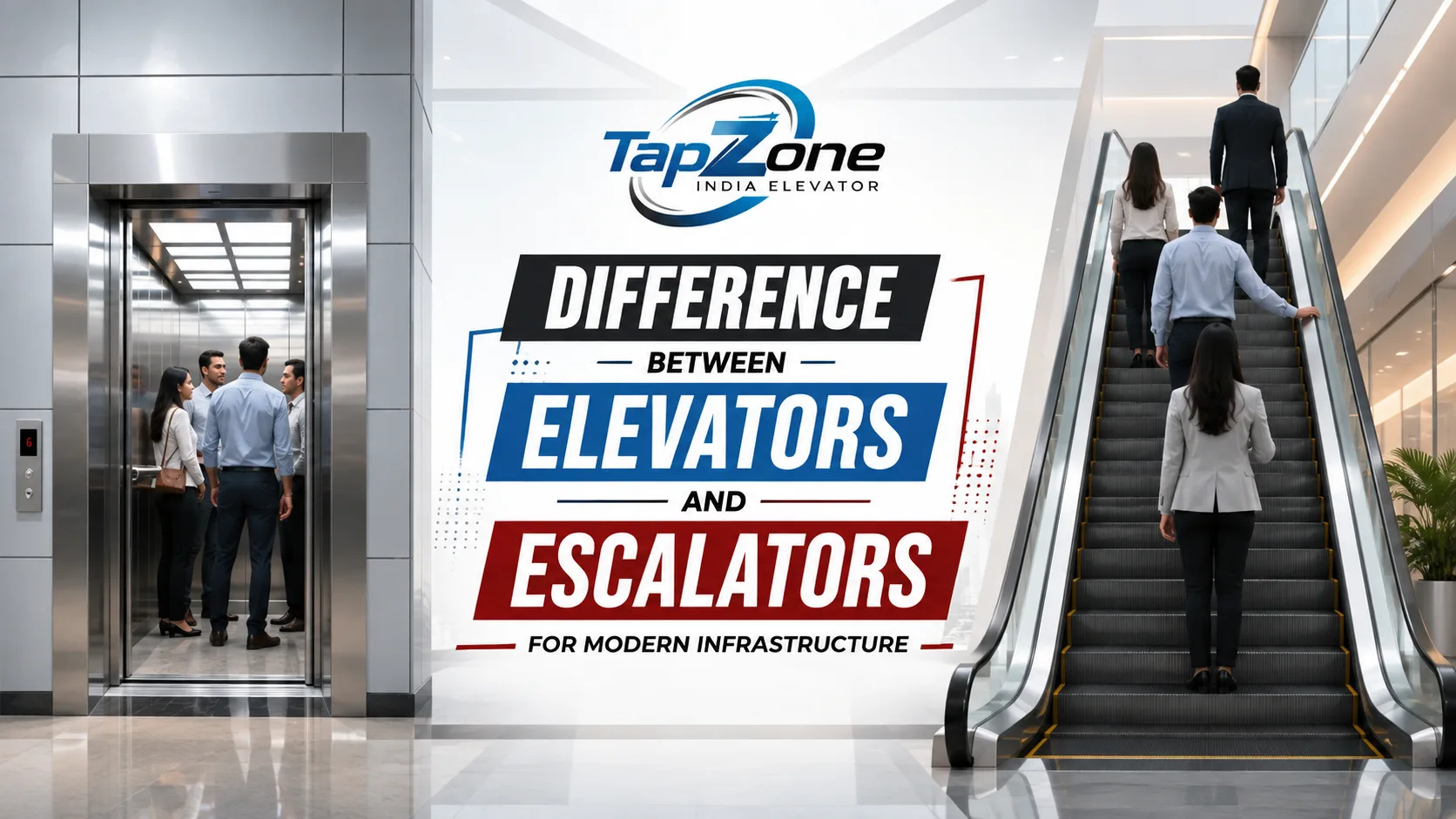
Introduction to Elevator and Escalators
Modern buildings are not only structures that are constructed to impress but rather structures that offer convenience, accessibility, efficiency, and safety. From an apartment complex to a shopping mall, from a hospital to an airport, from a hotel to a metro station, and from commercial complexes to other infrastructures, vertical transportation has become a key requirement. Of the many systems being used, the elevator and escalators have emerged as the most common forms.
There is a comparison of elevator vs escalator when deciding the right transport mechanism for a particular project. While both are designed to transport people effectively, their applications, methods of operation, requirements for installation, and costs are quite different. The difference between elevator and escalator will help in making informed decisions about the right transportation system for any kind of modern infrastructure.
Tapzone India Elevator believes that selection of the right form of vertical transportation will be based on your type of building, traffic, space available, and requirements of accessibility. This guide offers information about elevator vs escalator, provides you with the difference between elevator and escalator, and helps you find out whether you need an elevator or escalator in your property.
What is an Elevator?
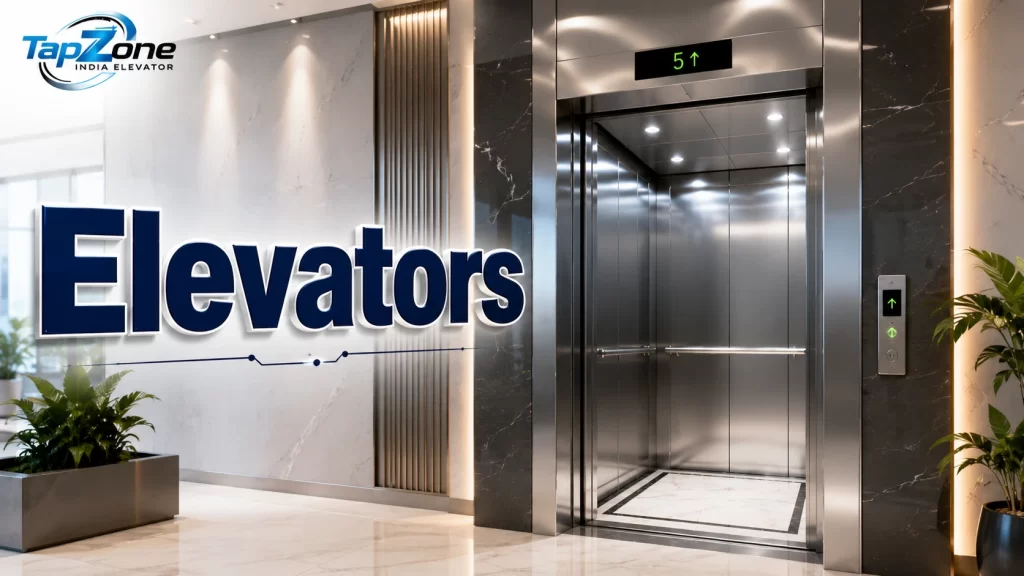
An elevator is an advanced transport device that lifts people or cargo from one floor to another of a particular structure. An elevator uses sophisticated machinery like traction motors, hydraulics, cables, pulley systems, and intelligent controls to move vertically through a closed shaft.
Presently, elevators can be used in residential buildings, hospitals, malls, offices, hotels, schools and colleges, factories, warehouses, and high-rise structures. Elevators make transport safe and convenient for everyone without distinction, even for physically challenged persons.
Talking about elevators vs escalators, elevators find preference wherever the issues of accessibility, privacy, heavy lifting capacity, or greater height are concerned. This is the most important thing that distinguishes between the elevator and the escalator.
Modern elevators include several advanced features, including:
- Automatic doors
- Smart destination control
- Touchless operation
- Emergency rescue systems
- Energy-saving drives
- Voice announcements
- High-speed operation
- IoT-based monitoring
These innovations have made elevator and escalator technologies smarter and more reliable than ever before.
What is an Escalator?
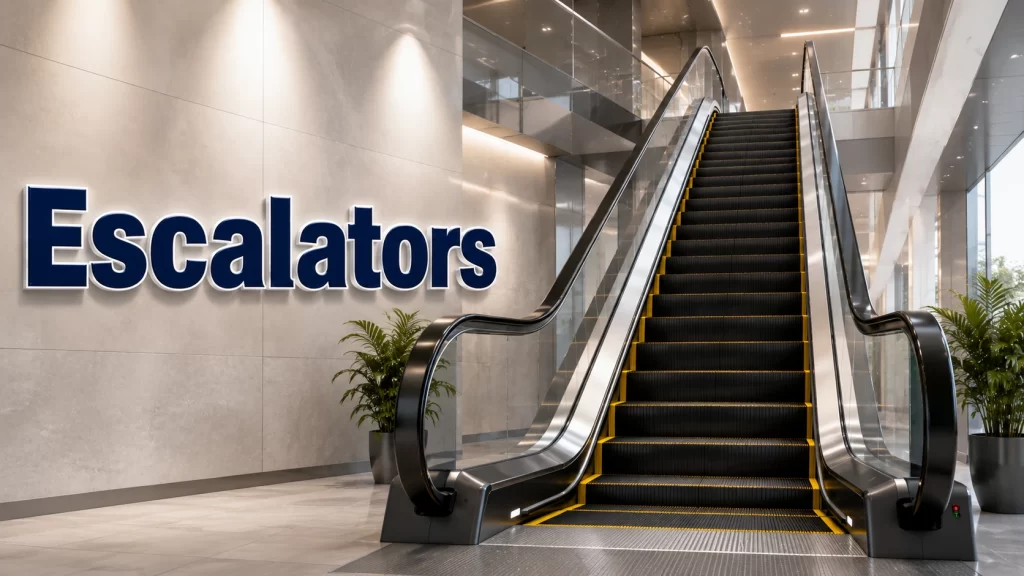
An escalator is a continuously moving staircase designed to transport people between floors without requiring them to climb traditional stairs. Unlike elevators, escalators operate continuously and can accommodate a large number of passengers simultaneously.
Escalators are commonly installed in:
- Shopping malls
- Airports
- Railway stations
- Metro stations
- Exhibition centers
- Commercial buildings
- Supermarkets
- Entertainment complexes
In the comparison of escalator vs elevator, escalators are ideal for places with heavy pedestrian traffic because they provide uninterrupted movement. However, they are not suitable for transporting wheelchairs, hospital beds, or heavy goods, which highlights another important difference between elevators and escalators.
Why Understanding Elevator vs Escalator Matters
Many project owners assume that elevators and escalators serve the same purpose. In reality, they solve different transportation challenges.
Understanding elevator vs escalator helps you:
- Improve passenger movement
- Increase building efficiency
- Enhance accessibility
- Reduce waiting time
- Optimize installation costs
- Improve property value
- Ensure compliance with safety regulations
Before deciding on an elevator or escalator, it is essential to analyze the building’s purpose, user traffic, and available space.
Difference Between Elevator and Escalator
The difference between elevator and escalator goes far beyond appearance. Both systems are designed for vertical transportation but differ in functionality, operation, installation, maintenance, and user experience.
| Feature | Elevator | Escalator |
|---|---|---|
| Movement | Vertical | Inclined Continuous Movement |
| Capacity | Limited passengers per trip | Continuous passenger flow |
| Accessibility | Wheelchair Friendly | Not suitable for wheelchairs |
| Speed | Faster vertical travel | Moderate movement speed |
| Privacy | Enclosed cabin | Open staircase |
| Best For | High-rise buildings | Public areas with heavy foot traffic |
| Goods Transportation | Yes | No |
| Hospital Use | Highly suitable | Not suitable |
This comparison clearly explains the difference between elevator and escalator and why selecting the right system depends entirely on building requirements.
Elevator vs Escalator: Working Principle
Understanding the working mechanism further clarifies the debate of elevator vs escalator.
Elevator Working
An elevator works by moving a cabin vertically using:
- Electric traction motors
- Steel ropes
- Counterweights
- Hydraulic cylinders (for hydraulic elevators)
- Smart controllers
- Safety brakes
- Guide rails
Passengers select the destination floor, and the control system safely moves the elevator cabin to the desired location.
Escalator Working
An escalator consists of:
- Moving steps
- Drive motor
- Chains
- Rollers
- Handrails
- Truss structure
The steps move continuously in a loop, allowing passengers to step on and off without waiting.
When comparing escalator vs elevator, elevators provide point-to-point transportation, whereas escalators provide continuous passenger movement.
Elevator or Escalator: Which One Should You Choose?
One of the most frequently asked questions is whether to install an elevator or escalator.
The answer depends entirely on the building’s function.
Choose an elevator if you need:
- Accessibility for elderly people
- Wheelchair access
- Transportation of goods
- High-rise building connectivity
- Hospital applications
- Residential buildings
- Office towers
Choose an escalator if your building experiences:
- Heavy pedestrian traffic
- Continuous movement of people
- Shopping mall operations
- Airport terminals
- Metro stations
- Railway stations
- Commercial retail spaces
Understanding elevator or escalator requirements before construction helps reduce future operational costs and improves user satisfaction.
Advantages of Elevators
In the comparison of elevator vs escalator, elevators provide several unique advantages.
1. Accessibility
Elevators are essential for elderly individuals, wheelchair users, patients, and people carrying luggage.
2. Space Efficiency
Elevators require less floor area than long escalators, making them ideal for compact buildings.
3. Heavy Load Transportation
Freight elevators can transport machinery, goods, hospital equipment, and industrial materials efficiently.
4. Enhanced Safety
Modern elevators include emergency alarms, automatic rescue devices, overload sensors, and intelligent monitoring systems.
5. Suitable for Tall Buildings
Unlike escalators, elevators can efficiently serve buildings with dozens of floors.
This makes elevators the preferred solution in many elevator and escalator planning projects.
Advantages of Escalators
When evaluating escalator vs elevator, escalators also offer several important benefits.
Continuous Passenger Movement
Escalators never stop during normal operation, allowing uninterrupted passenger flow.
Reduced Waiting Time
Unlike elevators, passengers do not need to wait for a cabin.
High Passenger Capacity
Escalators handle thousands of passengers every hour, making them ideal for commercial environments.
Simple Navigation
People can instantly understand how to use escalators without operating buttons or controls.
Excellent for Retail Spaces
Shopping malls use escalators to encourage customer movement across multiple floors, increasing visitor engagement.
Applications of Elevators and Escalators
The choice between elevator and escalator depends on the nature of the building and its expected traffic.
Elevators Are Commonly Used In:
- Residential apartments
- Hospitals
- Hotels
- Office buildings
- Factories
- Warehouses
- Educational institutions
- High-rise towers
- Luxury villas
Escalators Are Commonly Used In:
- Shopping malls
- Airports
- Metro stations
- Railway stations
- Supermarkets
- Convention centers
- Multiplex cinemas
- Exhibition halls
Understanding these applications makes the difference between elevator and escalator much clearer for architects and developers.
Why Modern Infrastructure Needs Both
Modern intelligent building designs utilize elevator and escalator systems to optimize the performance of these transport facilities. The use of elevators makes buildings accessible and ensures private transportation, whereas escalators help move in a consistent and constant manner in public areas where traffic is high.
Thus, for instance, a large shopping center can use escalators for customer transportation, but elevators for older people, the disabled, those who have children in prams, and for cargo transportation. This combination provides efficiency, safety, and convenience for customers.
Tapzone India Elevator specializes in elevator engineering and produces highly efficient elevators that will help create intelligent buildings of the future. Be it elevator vs escalator, escalator vs elevator, difference between elevator and escalator, choosing between elevator and escalator or designing elevator and escalator systems, making the right decision is important.
Future Trends in Elevator and Escalator Technology
The future of elevators and escalators will be dictated by innovations, automation, sustainability, and building management systems. With the increase in height of buildings in cities, owners are seeking transportation means that can save their time, money, and enhance the efficiency of transport. Modern technology has changed elevators and escalators into intelligent transportation systems, which can bring about efficiency.
In discussing elevator vs escalator regarding future innovations, the following aspects come into play – energy conservation, predictive maintenance, artificial intelligence (AI), Internet of Things (IoT), touchless controls, and advanced safety features. The innovations in these two means of transport have been making their performances more similar and efficient in terms of their operations.
Top brands offer destination control systems, regenerative drives, cloud monitoring, and smart sensing technologies that make the machines perform optimally. Whichever option one chooses, investing in modern technology is the best choice.
Smart Features in Modern Elevators
Today’s elevators are no longer simple lifting devices. They are intelligent transportation systems equipped with advanced technologies that improve efficiency and passenger convenience.
AI-Based Destination Control
Artificial Intelligence helps group passengers traveling to similar floors, reducing waiting times and improving traffic management. This innovation plays a significant role in modern elevator vs escalator comparisons because elevators are becoming smarter than ever before.
Touchless Operation
Touchless buttons and smartphone-based controls improve hygiene and user convenience, especially in hospitals, hotels, and commercial buildings.
Energy-Efficient Drives
Modern elevators use regenerative drives that convert braking energy into electricity, reducing power consumption and lowering operating costs.
Remote Monitoring
IoT-enabled elevators continuously send performance data to maintenance teams, allowing problems to be detected before they become major failures.
Emergency Rescue Systems
Automatic rescue devices safely move passengers to the nearest floor during power failures, ensuring maximum passenger safety.
These innovations clearly demonstrate how the difference between elevator and escalator continues to evolve with advancing technology.
Advanced Features in Modern Escalators
Escalators have also undergone significant improvements to increase efficiency, safety, and sustainability.
Automatic Speed Control
Sensors detect passenger movement and reduce operating speed during low-traffic periods, helping save electricity.
Energy-Saving Modes
Modern escalators automatically enter standby mode when not in use, reducing unnecessary energy consumption.
Smart Safety Sensors
Advanced sensors monitor step alignment, handrail movement, chain tension, and motor performance to improve operational safety.
LED Lighting Systems
Energy-efficient LED lighting enhances visibility while lowering electricity costs.
Anti-Slip Step Design
Improved step surfaces provide better grip and reduce the risk of slips, particularly in public transportation hubs.
When discussing escalator vs elevator, these technological upgrades make escalators safer and more cost-effective for commercial applications.
Safety Features Every Building Should Consider
Safety is one of the most important aspects when selecting an elevator and escalator system. Modern vertical transportation equipment is designed with multiple safety mechanisms to protect passengers during daily operation.
Elevator Safety Features
- Automatic emergency braking system
- Overload detection sensors
- Emergency alarm and communication system
- Fire emergency operation
- Backup power support
- Door obstruction sensors
- Automatic rescue device
- Earthquake response mode (where applicable)
Escalator Safety Features
- Emergency stop buttons
- Step demarcation lines
- Comb plate safety sensors
- Skirt protection system
- Handrail speed monitoring
- Broken step detection
- Motor overload protection
- Anti-reverse mechanism
These features highlight another important difference between elevator and escalator, as each system requires specialized safety measures based on its operation.
Maintenance Requirements
Proper maintenance extends equipment life, improves safety, and reduces unexpected breakdowns.
Elevator Maintenance
Routine elevator maintenance generally includes:
- Inspecting cables and ropes
- Checking door mechanisms
- Lubricating moving components
- Testing emergency brakes
- Examining control panels
- Software diagnostics
- Battery inspection
- Cleaning guide rails
Regular maintenance ensures smooth operation and enhances passenger confidence.
Escalator Maintenance
Escalator servicing involves:
- Cleaning steps and tracks
- Checking drive chains
- Inspecting handrails
- Testing emergency stop buttons
- Lubricating moving parts
- Monitoring motor performance
- Replacing worn rollers
- Inspecting safety switches
Whether comparing elevator vs escalator or planning long-term operations, preventive maintenance significantly reduces repair costs.
Energy Efficiency Comparison
Energy efficiency has become an important factor in modern infrastructure projects.
Elevator Energy Consumption
Modern elevators use energy-saving technologies such as:
- Regenerative drives
- LED cabin lighting
- Sleep mode
- Variable frequency drives
- Smart traffic management
These features reduce electricity consumption while maintaining excellent performance.
Escalator Energy Consumption
Escalators typically consume power continuously during operation. However, advanced models now include:
- Passenger detection sensors
- Automatic standby mode
- Variable speed operation
- Efficient drive motors
Understanding the difference between elevator and escalator in terms of energy use helps building owners make cost-effective decisions.
Cost Comparison
Budget plays a major role when deciding between an elevator or escalator.
Elevator Costs
Costs depend on:
- Building height
- Lift capacity
- Cabin design
- Speed
- Technology features
- Installation complexity
- Number of stops
Escalator Costs
Costs depend on:
- Rise height
- Inclination angle
- Passenger capacity
- Indoor or outdoor installation
- Safety features
- Operating hours
Although installation costs vary, the decision should always be based on functionality rather than price alone.
Common Mistakes to Avoid
Many developers make costly mistakes while selecting vertical transportation systems.
Avoid these common errors:
- Choosing equipment without traffic analysis.
- Ignoring accessibility requirements.
- Underestimating maintenance costs.
- Selecting low-quality components.
- Overlooking future building expansion.
- Ignoring safety standards.
- Installing insufficient passenger capacity.
- Choosing equipment based only on initial price.
Proper planning helps maximize the performance of both elevator and escalator systems.
How to Choose the Right Solution
Choosing between elevator vs escalator depends on several important factors.
Choose an Elevator When:
- The building has multiple floors.
- Accessibility is mandatory.
- Heavy goods need transportation.
- Elderly or disabled users are frequent visitors.
- Privacy and comfort are priorities.
- Hospitals or residential buildings are involved.
Choose an Escalator When:
- Passenger traffic is extremely high.
- Continuous movement is required.
- Shopping malls or airports are involved.
- Quick movement between adjacent floors is needed.
- Large public spaces require crowd management.
Sometimes the ideal solution is installing both systems together, combining the strengths of elevator and escalator technologies.
Why Choose Tapzone India Elevator?
Selecting the right supplier is just as important as selecting the right equipment. Tapzone India Elevator is committed to delivering advanced vertical transportation solutions that meet international quality and safety standards.
What Makes Tapzone India Elevator Different?
- Premium-quality elevator solutions
- Modern engineering and technology
- Energy-efficient systems
- Customized installation options
- High safety standards
- Professional technical support
- Timely maintenance services
- Reliable after-sales assistance
- Competitive pricing
- Customer-focused approach
Whether you are evaluating elevator vs escalator, comparing escalator vs elevator, understanding the difference between elevator and escalator, deciding on an elevator or escalator, or planning integrated elevator and escalator systems, Tapzone India Elevator provides dependable solutions tailored to modern infrastructure projects.
Frequently Asked Questions (FAQs)
What is the main difference between elevator and escalator?
The primary difference between elevator and escalator is that an elevator moves passengers vertically inside an enclosed cabin, while an escalator is a continuously moving staircase designed for uninterrupted pedestrian movement.
Which is better: elevator vs escalator?
The answer depends on the application. In the comparison of elevator vs escalator, elevators are ideal for accessibility, high-rise buildings, and transporting goods, while escalators are better suited for areas with heavy pedestrian traffic.
Can a building have both elevator and escalator?
Yes. Many commercial buildings, shopping malls, airports, and metro stations install both elevator and escalator systems to improve accessibility and passenger flow.
Which system requires more maintenance?
Both systems require regular maintenance. Elevators need inspections of mechanical and electrical components, while escalators require frequent servicing of moving steps, chains, and handrails.
Which is more energy efficient?
Modern elevators equipped with regenerative drives often consume less energy than older systems. However, new-generation escalators with automatic standby modes and speed control have also become highly energy efficient.
Final Thoughts
To make a proper decision regarding the need for an elevator or escalator, one should understand the difference between the two systems. Although the debate of elevator vs escalator is mainly based on projects’ needs, both systems are equally important when it comes to modern construction.
The elevator serves as a safe and comfortable system of vertical transportation that is suitable for residential tower blocks, hospitals, offices, industries, and any other places where passengers are expected. Meanwhile, according to the escalator vs elevator comparison, an escalator cannot be replaced by any other means of passenger transportation when it comes to shopping malls, airports, railway stations, and similar places with high foot traffic.
When choosing between an elevator and an escalator, pay attention to such parameters as the purpose of the building, passenger flow, accessibility, space availability, and other things related to maintenance and costs of operation. In some cases, the combination of an elevator and escalator gives the best results.
If you want to buy a reliable elevator or escalator solution for your business or property, contact Tapzone India Elevator. This company is committed to providing innovative and high-performance solutions in the field of vertical transportation.