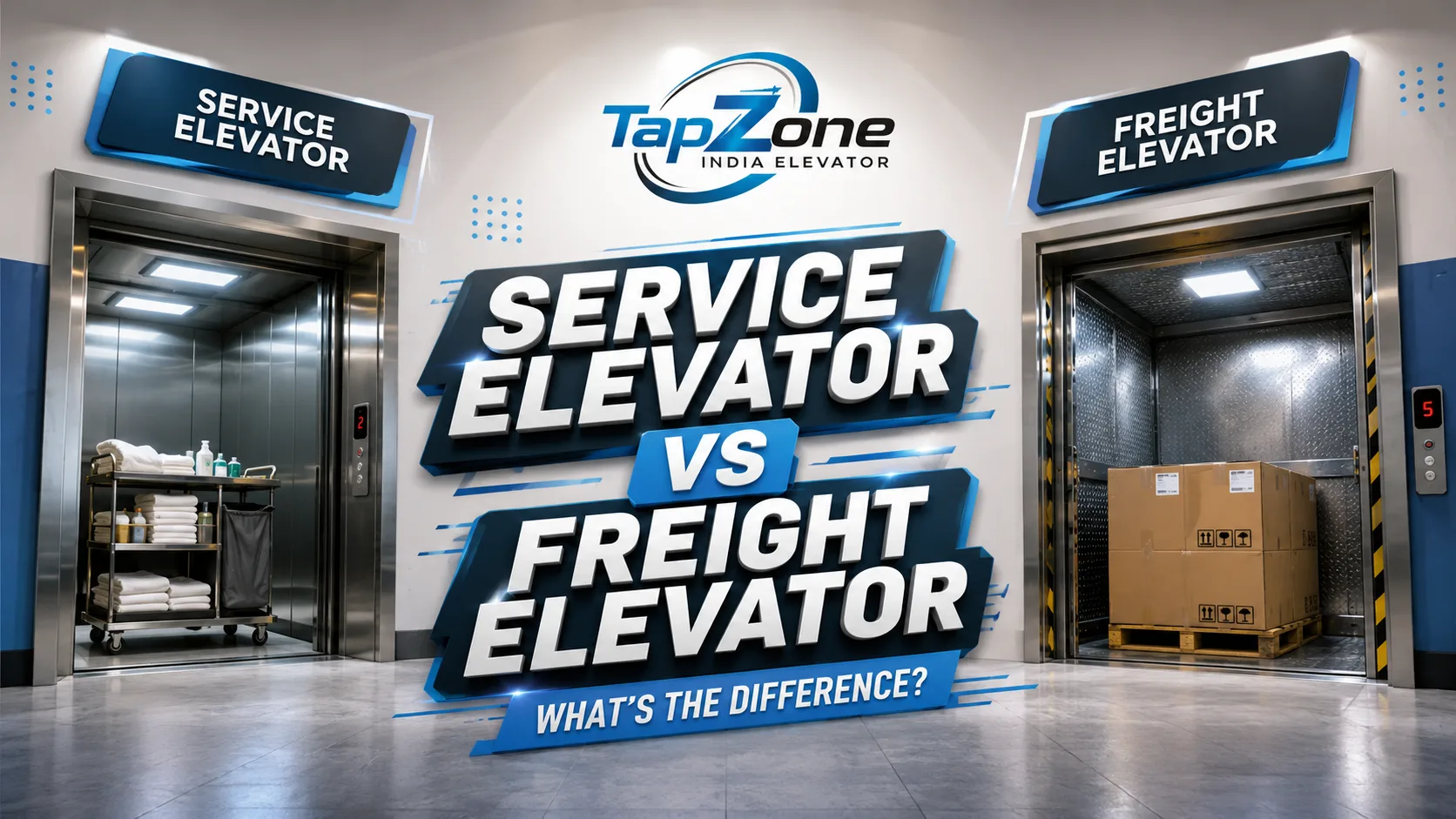
Introduction to Freight Elevator and Service Elevator
Today’s commercial buildings, factories, warehouses, hospitals, hotels, shopping centers, and industrial buildings may require something more apart from passenger elevators. When large and bulky loads, machinery, supplies, maintenance items or anything else related to services needs to be carried from one floor to another, then certain kinds of lifts will definitely be necessary. These can include a service elevator and a freight elevator. Both of them are not intended for passenger use, but construction, load-bearing capacity, application and other things related to them may differ much.
It is very important to know what the difference between those two kinds of elevators is before choosing an elevator for your commercial or industrial building. Such choice can improve transportation, minimize manual labor, time and many other things.
In the following guide, you will learn about freight elevator meaning, freight elevator operation, freight lift applications, service elevator purposes and how to make the right choice between them.
What Is a Freight Elevator?
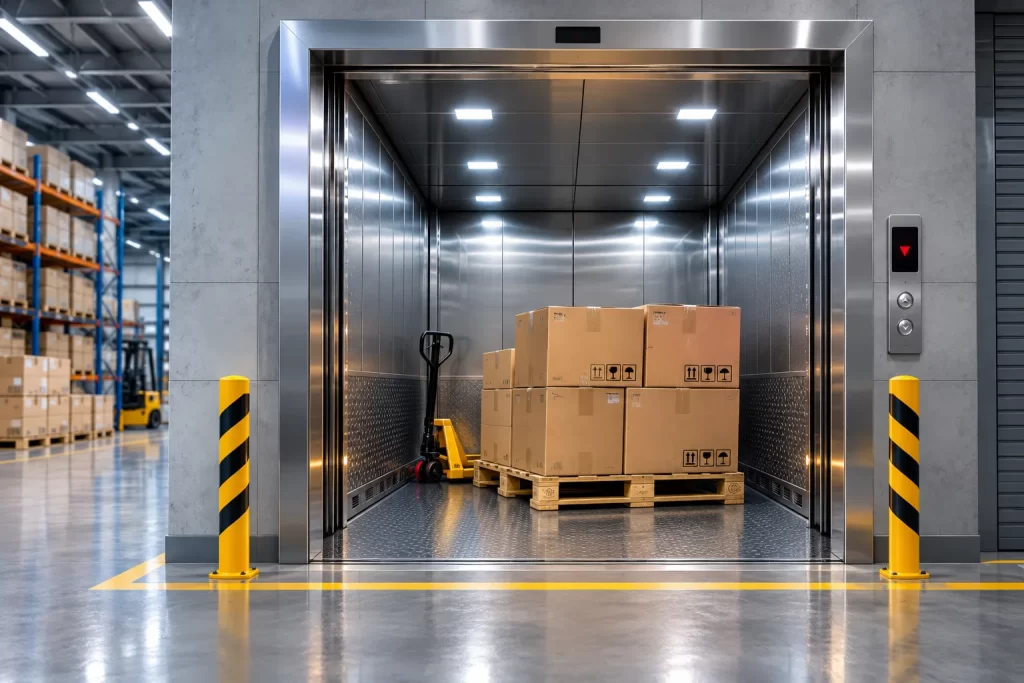
A freight elevator is a specialized type of heavy elevator intended for carrying cargos, machines, raw materials, pallets, and industrial equipment from one floor to another floor. Contrary to conventional passenger elevators, the basic function of a freight elevator is durability, load carrying capacity and suitability for industrial applications.
From a conceptual point of view, the freight elevator definition refers to a vertically operated lifting mechanism which has been designed especially for lifting up cargo. The construction of the elevator may vary depending on how it will be used.
A freight elevator is typically installed in factories, warehouses, manufacturing firms, logistics centers, commercial structures and industries. Its design helps organizations to move material without the need for cranes, forklifts or manual work.
The word frieght elevator is a common misspelling of freight elevator. Although “frieght elevator” is a common typographical error, the accurate terminology for it is “freight elevator.”
What Is a Service Elevator?
Service Elevator is mainly meant to fulfill the purposes of operation and maintenance of building. It is used by housekeeping crew, maintenance people, hotel staff, hospital staff, building staff and many more for transferring their supplies and equipment.
A service elevator is typically located in hotels, hospitals, malls, office buildings and residential or commercial complexes. It normally ensures a dedicated mode of transport for operations, so that passenger elevators remain dedicated to passengers only.
For instance, hotel staff could use a service elevator for transporting housekeeping trolley, linens, cleaning tools, food supplies and maintenance supplies. In a similar manner, hospital uses service elevators for equipment, supplies and operational needs.
As compared to a heavy industrial freight elevator, a service elevator could be designed for staff and goods transportation both.
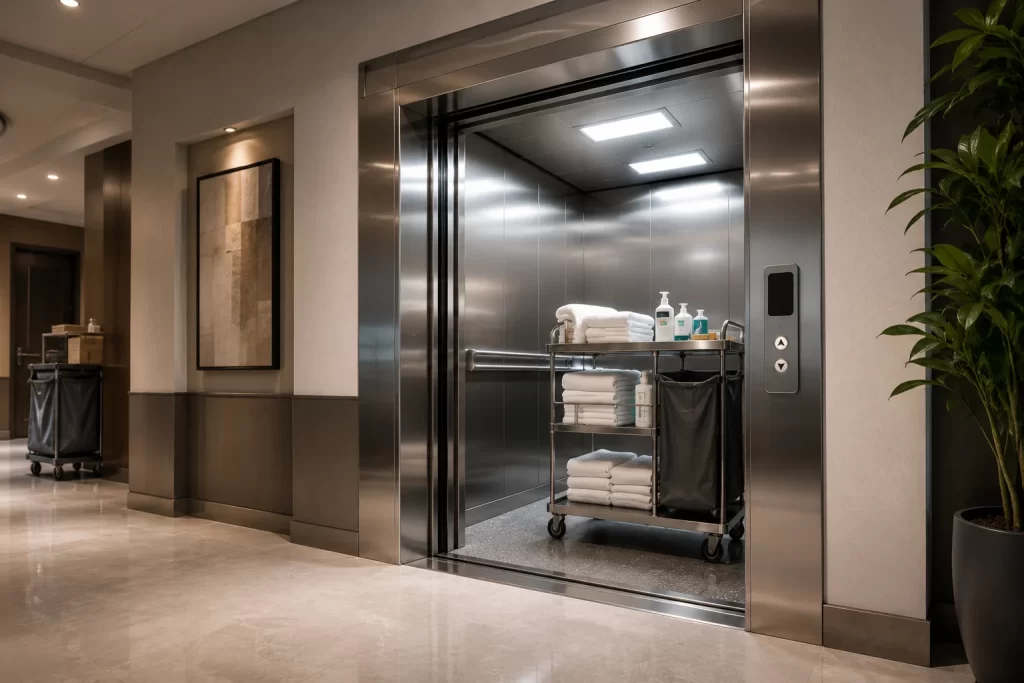
Freight Elevator vs. Service Elevator: The Basic Difference
On a first look, one can think that the two are the same since they can carry cargo. This, however, is not true as the purpose of the two elevators differs.
One would prefer to have a freight lift when he needs an elevator which would be able to transport materials in large quantities. Such an elevator is designed for tough industrial conditions and frequent transport of heavy material.
On the contrary, a service elevator is installed in order to make things easier for employees. It allows moving materials, carts, equipment and maintenance supplies with ease.
Such a distinction is especially significant when determining load requirements. The heavy industry would definitely need a freight elevator, whereas the hotel or office building could do with a service one.
Key Features of a Freight Elevator
A modern freight elevator can include several features that make it suitable for demanding applications.
- High load-bearing capacity
- Heavy-duty cabin construction
- Reinforced flooring
- Durable landing doors
- Strong structural components
- Industrial-grade safety systems
- Suitable controls for material handling
- Robust guide rail arrangements
- Long operational life
- Customizable cabin dimensions
- Protection against frequent loading and unloading
- Suitable design for industrial environments
A freight lift can also be customized according to the dimensions and weight of the goods that need to be transported. This is particularly useful when businesses handle oversized machinery, pallets, components or production materials.
Applications of Freight Elevators
The application range of a freight elevator is broad. Manufacturing industries use these systems to transfer raw materials and finished products between floors. Warehouses use them for vertical movement of inventory, pallets and equipment.
Common applications include:
- Manufacturing plants
- Warehouses
- Logistics centres
- Automobile industries
- Engineering facilities
- Textile industries
- Retail storage facilities
- Industrial buildings
- Construction-related facilities
- Distribution centres
- Commercial storage areas
- Production units
A freight lift can significantly improve material-handling efficiency when properly matched with the building layout and operational requirements.
Applications of Service Elevators
A service elevator is commonly used where staff need a separate route for transporting operational materials.
Typical applications include:
- Hotels
- Hospitals
- Shopping malls
- Restaurants
- Office buildings
- Residential towers
- Department stores
- Educational institutions
- Commercial complexes
- Large institutional buildings
For example, in a hotel, a service elevator can help housekeeping teams transport laundry, cleaning carts and supplies without interfering with guest movement.
Why Choosing the Right Elevator Matters
Selecting between a freight elevator and a service elevator should not be based only on available space or initial cost. The decision should consider load capacity, dimensions, frequency of use, building type, material characteristics, and safety requirements.
A business that regularly transports extremely heavy materials may require a dedicated freight lift. Installing a standard service-oriented system for such an application could result in operational limitations.
On the other hand, a hotel or office building may not require a heavy industrial freight elevator if the primary requirement is transporting staff, carts, and moderate-weight supplies.
How Freight Elevator Capacity Is Determined
The required capacity of a freight elevator depends on the maximum weight and dimensions of the goods being transported. Businesses should consider not only the average load but also the heaviest expected load.
Important considerations include:
- Maximum load weight
- Cabin dimensions
- Door opening size
- Loading method
- Pallet dimensions
- Material type
- Number of daily trips
- Floor-to-floor travel distance
- Available shaft space
- Building structure
A properly selected freight lift should provide sufficient capacity without creating unnecessary operational limitations.
Major Differences Between Freight and Service Elevators
A comparison of the two elevators’ construction and applications makes the distinction more apparent. While the two elevators have the ability to move materials up and down, they are not always substitutes for each other.
The construction of a freight elevator is built to accommodate material lifting. The cabin, doors, floor, and other mechanisms of the freight elevator can be built to endure the stress of heavy lifting.
On the other hand, the construction of a service elevator is meant to cater to the movement of staff in addition to materials within a building.
In such a case, a freight elevator will be most suitable where heavy loads are lifted regularly, while a service elevator is better suited where an operational elevator is needed in a building.
Freight Elevator vs. Service Elevator Comparison
| Feature | Freight Elevator | Service Elevator |
|---|---|---|
| Primary purpose | Heavy goods transportation | Staff, supplies and operational movement |
| Typical environment | Factories and warehouses | Hotels, hospitals and commercial buildings |
| Load requirement | Usually higher | Moderate to high depending on design |
| Cabin design | Heavy-duty | Operational/service-oriented |
| Flooring | Reinforced for goods | Durable and easy to maintain |
| Usage | Industrial material handling | Building support activities |
| Passenger use | Usually restricted or application-dependent | Often designed for staff use |
| Door design | Strong and durable | Durable with convenient access |
| Main priority | Load handling | Operational convenience |
| Customization | Highly customizable | Customizable according to building needs |
This comparison shows why selecting the correct elevator depends heavily on the actual application.
Construction and Durability
One of the most notable differences is that of construction. The construction of a freight elevator will usually take into account the frequent loading and unloading of materials. This means that the construction of such an elevator will be designed to withstand tough usage conditions.
A freight lift may have a reinforced cage design and floor that can withstand heavy machinery and materials.
The construction of a service elevator also needs to be durable, more so in busy buildings. But then again, the nature of the load is usually different from what it is for a freight elevator.
The correct design depends on the building’s operational profile.
Loading and Unloading Requirements
Loading requirements are yet another criterion to consider while differentiating between freight elevators and service elevators.
An industrial setting might make use of forklifts, pallet trucks or other such devices to load cargo into a freight elevator. Thus, the design of the lift should be such that it allows for efficient loading.
Service elevators can be loaded by hand or by using service carts. In case of hotels and hospitals, easy maneuvering of carts is more important than heavy lifting capacity.
A knowledge of the entire loading process is necessary before choosing a freight elevator or a service lift.
Safety Considerations
Safety should always be one of the highest priorities when selecting an elevator. A freight elevator must be appropriately designed for the loads and operating environment in which it will work.
Important safety considerations may include:
- Proper load rating
- Door interlocking systems
- Emergency stopping arrangements
- Overload protection
- Reliable control systems
- Suitable braking systems
- Emergency communication
- Proper shaft protection
- Regular inspection
- Preventive maintenance
- Trained operators where required
A service elevator also needs suitable safety features because it may be used by staff and may carry both people and materials.
The elevator should never be operated beyond its rated capacity. Overloading a freight elevator or service system can increase mechanical stress and create serious operational risks.
Which Is Better: Freight Elevator or Service Elevator?
There is no universal answer because the right choice depends on the application.
If the primary requirement is moving heavy machinery, raw materials, pallets, or industrial products, a freight elevator is generally the more suitable option.
If the requirement is transporting housekeeping carts, maintenance equipment, supplies, and authorized staff in a hotel, hospital, or commercial building, a service elevator may be more appropriate.
A freight lift is especially valuable when vertical material handling is a major part of daily operations.
Factors to Consider Before Buying
Before selecting an elevator, businesses should evaluate several factors.
1. Load Capacity
Determine the maximum weight that needs to be transported. The rated capacity should comfortably support the expected application.
2. Cabin Size
The cabin should accommodate the dimensions of goods, carts, pallets, or equipment.
3. Door Dimensions
Large or bulky products may require wider and taller doors.
4. Frequency of Use
A high-traffic facility may require a system designed for frequent operation.
5. Building Layout
Available shaft space, floor height, and structural conditions should be evaluated before installation.
6. Loading Method
Consider whether materials will be loaded manually, using carts, pallet trucks or forklifts.
7. Maintenance Requirements
Regular maintenance is essential for dependable elevator operation and longer service life.
8. Safety Requirements
The system should include appropriate safety mechanisms for the intended application.
9. Installation Conditions
Existing buildings may have different structural limitations compared with new construction projects.
10. Future Requirements
Businesses should consider future changes in production, storage and material-handling needs before finalizing the elevator.
Common Mistakes When Selecting an Elevator
A common error is using the purchase cost of the elevator as the basis of decision making. It’s possible that an elevator with a lower cost might not deliver the required capacity or durability.
Another error is not taking into consideration the cabin size. An elevator might have the weight capacity needed for your needs but still not be suitable because you can’t fit the load in the cabin.
It’s also important to not confuse the service elevator with a heavy-duty industrial material handling elevator. Although the former is able to lift goods, it’s not designed for such loads.
Moreover, the phrase “frieght elevator,” which is often found on the Internet, is a common misspelling, and businesses should use the proper name “freight elevator.”
Maintenance of Freight and Service Elevators
Regular maintenance plays a major role in elevator performance. A freight lift used in an industrial environment may experience significant mechanical stress because of frequent loading and unloading.
Maintenance programs can include:
- Inspection of doors
- Checking safety systems
- Lubrication of moving components
- Inspection of ropes or lifting mechanisms
- Checking guide systems
- Electrical system inspection
- Control panel testing
- Cabin inspection
- Brake system inspection
- Preventive replacement of worn components
A service elevator should also receive routine inspections because frequent staff and material movement can gradually affect components.
Why Businesses Choose Tapzone India Elevator
Tapzone India Elevator recognizes the fact that every structure has varying needs in terms of vertical transportation. Not all structures can adopt the same design of an elevator.
It is important that the ideal freight or service elevator is chosen by taking into consideration the usage, load, dimensions, traffic flow and the installation parameters.
Where there is industrial application, then it will be necessary for the organization to choose a freight lift that makes it easy to move materials in an organized manner.
In the case of commercial and institutional structures, then it will be wise to choose a service elevator system that helps in carrying out staff activities without affecting passenger traffic.
Frequently Asked Questions
What is the freight elevator meaning?
The freight elevator meaning refers to an elevator primarily designed for transporting goods, machinery, materials and heavy loads between different floors.
What is a freight lift used for?
A freight lift is commonly used in factories, warehouses, manufacturing facilities, logistics centres and other locations where heavy goods need to move vertically.
Is a service elevator the same as a freight elevator?
No. A service elevator is generally designed for staff, supplies, and building-support activities, whereas a freight elevator is primarily focused on heavy material transportation.
Can a service elevator carry heavy goods?
It can carry goods within its rated capacity, but its suitability depends on the elevator’s specifications and intended application.
Why is the term frieght elevator used?
“Frieght elevator” is a common spelling mistake or search variation for “freight elevator.” The correct technical spelling is freight elevator.
Where are freight elevators commonly installed?
A freight elevator is commonly installed in warehouses, factories, production plants, industrial buildings, logistics facilities, and commercial storage environments.
Conclusion
To decide on the appropriate choice of a freight elevator and a service elevator, there has to be knowledge of the functions that the building will perform. The former will be geared towards cargo transport, while the latter will aid in building operations and staff activities.
Thus, the definition of a freight elevator revolves around material transport, while that of the service elevator will revolve around support of building operations.
For factories, warehouses and industries, the presence of an effective cargo lift will facilitate easy vertical cargo movement and minimize the need for human effort. On the other hand, for buildings such as hotels, hospitals, malls and other commercial buildings, the use of a well-designed service elevator will enhance efficiency in work flow and separation between passenger elevators and the operational elevators.
In case the application involves equipment like heavy machines, pallets, raw materials, maintenance tools, or anything else, then the selection of the elevator must take into account all the factors such as the weight, dimensions, frequency of use, and safety.
Tapzone India Elevator can assist companies in analyzing the requirements of elevators and make choices that are applicable for their applications.