Introduction to Industrial Goods Lift & Hydraulic Lift
There comes a time when all businesses find that lifting materials manually slows down operations, makes it more expensive and creates hazards in the workplace. In any warehouse, manufacturing facility, packaging company, cold room, car workshop, pharmaceutical company, shopping complex, or logistics hub, the efficient lifting of goods is one of the major concerns. Inefficiencies in material lifting not only lead to inefficiency in work but can also cause workplace accidents, damage to goods, and wastage of money. This is the reason why choosing the proper lifting mechanism is an important choice rather than merely buying equipment.
People have the wrong idea about all lifting systems being equal, but in fact, various industries need different lifting mechanisms depending on their own requirements. Small warehouses need to lift materials using smaller lifting systems, whereas bigger manufacturing facilities will need high-capacity machines to lift heavier loads regularly. It is always better to know how an industrial goods lift works, the places it can be used, and the most suitable one for your industry.
What are Industrial Goods Lifts?
At TapZone India Elevator, we think customers need to be fully aware of what they are going to invest in. Unlike other companies that just advertise their machines, we aim to assist businesspeople in making an informed choice of the suitable lifting system according to their specific needs. The knowledge on how to do this will save you money, ensure a safe work environment for your staff members, increase productivity, and prevent maintenance problems in the future. The following paper will provide information on everything you have to know regarding industrial goods lifts, hydraulic lifting systems, their functioning, advantages, disadvantages, usage, and purchasing criteria.
One of the major motives for choosing an industrial goods lift for industrial use is to ensure safety for workers. Transporting goods manually from one floor to another can lead to injuries, fatigue, and accidents. By making the right choice of lift, you will save your workers’ strength, protect your valuable goods while transporting them, and make your production processes much smoother.
Why Every Modern Industry Needs an Industrial Goods Lift
In modern-day industries, the need for tight schedules, wherein even a minute counts, exists. Delays in material transportation can have a serious negative impact on efficiency in production processes. An industrial goods lift helps solve the problem of quick and safe lifting of materials and goods from one floor to another without interfering in work.
A significant advantage of lifting systems in comparison with manually operated means of transportation is stable operation at any time of the day. People do not waste time moving goods but concentrate on their work. The result is efficiency, less labor weariness and injuries, less destruction of goods. In many cases, companies working with heavy materials observe an increase in productivity after installing the proper lifting system.
One more considerable advantage is space savings. Unlike ramps and forklift trucks used in narrow corridors, vertical lifting machines help save the space which is very important for industries like factories, warehouses, commercial buildings, and storage facilities because it directly contributes to efficiency.
As businesses develop, the need for efficient material handling equipment appears constantly. It is very important to invest in proper lifts not only now but also take into account the future expansion of business.
How an Industrial Goods Lift Works
Knowing the mechanism of the operation allows business owners to select the appropriate solution. Even though there are various lifting techniques, all the goods lifting solutions operate according to the same principle: they lift and lower goods from one level to another without additional effort of the workers.
The goods are lifted using the lifting platform or cabin. Various means (hydraulic cylinders, wire ropes, chains, guide rails, motors or counterweight) help to lift the goods. The cabin moves vertically along the guide.
Safety systems ensure the smooth and secure lifting by preventing any overloads, unwanted movements and possible failures during the operation. Control panels allow operating the system and moving it from one floor to another with ease.
Modern lifting solutions include such elements as an emergency stop function, door interlocks, overload and limit protection, as well as various safety brakes. The regular inspection and maintenance make sure that the system will operate perfectly for a long period.
The choice of the lifting technique depends on several aspects. They include, among other things, lifting height, load capacity, frequency of use, required installation space, environment and maintenance.
Different Types of Industrial Goods Lift
Every industry has unique operational requirements, which is why multiple lifting technologies are available. Selecting the correct type improves efficiency while reducing future maintenance expenses.
Hydraulic Goods Lift
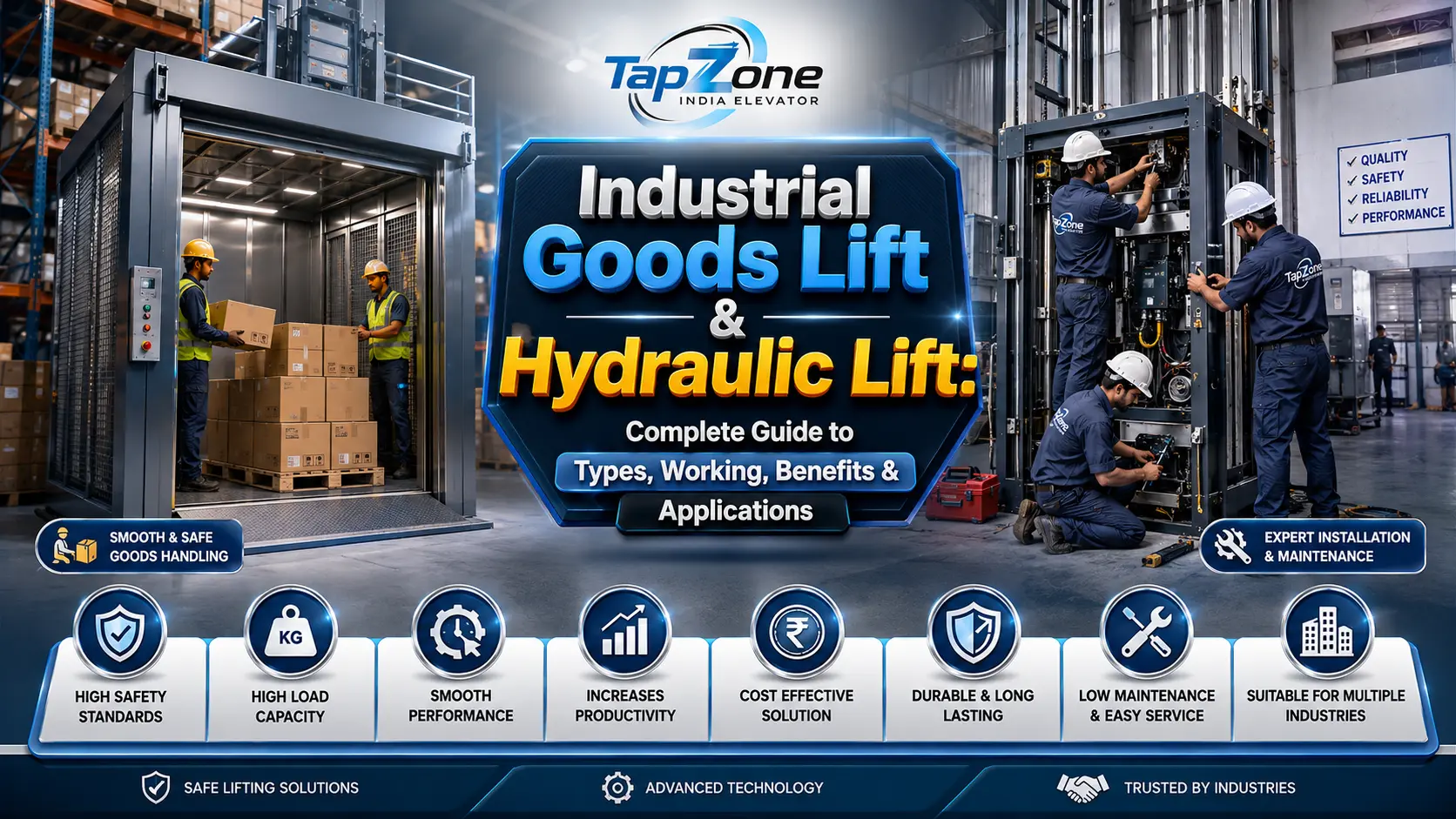
Hydraulic systems use pressurized hydraulic oil to move a piston that raises and lowers the platform. They are widely used for low to medium lifting heights and are known for smooth movement, high lifting capacity, and reliable performance. These systems are commonly found in factories, warehouses, automobile workshops, and industrial production units.
Wire Rope Goods Lift
Wire rope lifts use electric motors and steel wire ropes to move the platform vertically. They are suitable for taller buildings where faster lifting speeds and higher travel distances are required. Proper inspection of ropes and pulleys ensures reliable long-term operation.
Chain Driven Goods Lift
Chain-operated systems are designed for heavy-duty industrial applications where continuous material movement is necessary. Their robust construction makes them suitable for manufacturing facilities, engineering workshops, and production plants handling large loads every day.
Goods Elevator
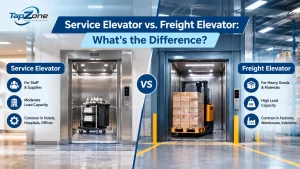
A goods elevator is specifically designed for transporting materials instead of passengers. These elevators feature reinforced cabins, heavy-duty doors, strong structural components, and advanced safety systems capable of handling industrial workloads efficiently.
Customized Industrial Lift
Some industries require customized lifting solutions because of limited installation space, unusual load dimensions, or special operational requirements. Tailor-made systems provide flexibility while ensuring maximum safety and performance according to specific industrial applications.
Uses of Hydraulic Lift
Uses of hydraulic lift are not confined to just transferring heavy loads from one level to another. The reason behind the widespread use of hydraulic lifting system technology in modern industries is that the system is reliable, easy to operate, and capable of transporting heavy loads.
Logistics centers and warehouses require the use of hydraulic lifting technology in order to transfer large boxes, pallets, machines, and other heavy loads between different storage levels. It helps organizations make efficient use of the limited space and cuts down the time required for loading and unloading of items.
The other areas where hydraulic lifting technology is used include auto service centers, pharmaceutical companies, hospitals, shopping malls, food processing industries, textile industries, and engineering workshops. Its capacity to lift heavy loads along with controlled movements makes it one of the safest material handling devices.
Hydraulic Lift Uses
Knowing the practical applications of hydraulic lift uses can assist in figuring out where these systems bring the maximum benefits. Hydraulic lifting equipment is not limited to only industrial areas because this technology finds its place in numerous other fields, where there is a need to move heavy material up and down.
Hydraulic lifts make it easier to transport various tools, pieces of furniture, cleaning devices, and other supplies needed at different floors of office buildings. Hotels, hospitals, shopping centers, universities, and other organizations may make use of these systems in order to optimize their operations and decrease the risks associated with manual labor.
The agricultural plants, freezing stations, milk factories, printing workshops, packaging industry, and distribution centers frequently employ hydraulic lifting systems in order to ensure smooth operation of their production. Thanks to such systems, it becomes possible to optimize the labor, decrease the costs of work, and increase the safety level in the workplace.
Advantages of Hydraulic Lift
The advantages of hydraulic lift make it one of the most trusted lifting solutions for industries that require safe, smooth, and reliable material transportation. Unlike many conventional lifting systems, hydraulic technology provides controlled lifting with fewer jerks, making it ideal for transporting delicate products, heavy machinery, packaged goods, and industrial equipment. Businesses that prioritize workplace safety often prefer hydraulic systems because they reduce sudden movements that may damage products or create unsafe working conditions.
Another major advantage is their excellent load-carrying capability. Hydraulic systems can easily handle heavy loads without compromising lifting stability. This makes them suitable for warehouses, manufacturing plants, engineering workshops, automobile industries, food processing units, and pharmaceutical facilities where heavy materials are moved throughout the day. A properly designed hydraulic system continues to deliver consistent performance even under demanding industrial conditions.
Disadvantages of Hydraulic Lift
Although hydraulic systems offer numerous benefits, understanding the disadvantages of hydraulic lift is equally important before making a purchasing decision. Every lifting technology has certain limitations, and selecting the right system depends on your building structure, lifting height, operational frequency, and future expansion plans. Knowing these factors helps businesses avoid choosing equipment that may not match their actual requirements.
Another consideration is operating speed. Hydraulic lifts usually focus on controlled and stable movement rather than high-speed transportation. For industries where rapid vertical movement across multiple floors is essential, different lifting technologies may be more appropriate. Understanding these practical limitations allows businesses to select equipment that truly matches their production needs rather than simply choosing the most popular option.
Uses of Lift
The uses of lift extend across almost every industrial and commercial sector where heavy materials need to be transported safely and efficiently. Modern lifting systems are no longer limited to factories; they have become essential equipment for warehouses, hospitals, shopping complexes, educational institutions, hotels, logistics centers, cold storage facilities, and large commercial buildings. Their primary purpose is to simplify material movement while reducing manual effort and workplace risks.
In manufacturing plants, lifting systems transport raw materials from storage areas to production lines and move finished products to packaging or dispatch sections. This continuous material flow reduces unnecessary delays, improves production efficiency, and helps businesses meet delivery schedules without increasing labour pressure. Consistent lifting performance also minimizes product damage during transportation.
Goods Lifts
Goods lifts are specially engineered lifting systems designed exclusively for transporting materials rather than passengers. They are built with reinforced platforms, heavy-duty structural components, durable guide rails, and advanced safety mechanisms capable of handling industrial workloads every day. Their robust design makes them suitable for continuous use in demanding working environments where reliability is essential.
As businesses continue expanding, material handling requirements also increase. Installing a properly designed goods lift helps organizations improve workflow, reduce labour dependency, save valuable operational time, and maintain consistent productivity. Instead of treating a lift as just another machine, industries increasingly recognize it as an essential part of an efficient and safe material handling system.
Goods Lift
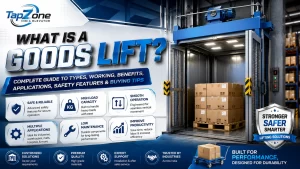
A goods lift is one of the most effective solutions for vertical material transportation in industrial and commercial facilities. Unlike passenger elevators, these lifts are specifically designed to carry goods, machinery, equipment, raw materials, finished products, and heavy industrial loads safely between different floors. Their strong construction allows them to operate reliably under challenging working conditions.
Selecting the right goods lift begins with understanding your actual operational requirements rather than focusing only on lifting capacity. Businesses should evaluate the type of materials being transported, frequency of use, available installation space, floor height, future expansion plans, and required safety features. Considering these factors before installation helps avoid expensive modifications later.
Goods Elevator
A goods elevator is a specially engineered vertical transportation system designed exclusively for moving heavy materials, machinery, cartons, pallets, raw materials, and finished products between different floors. Unlike passenger elevators, a goods elevator focuses on strength, durability, and load-handling capacity. It is widely used in factories, warehouses, hospitals, shopping malls, pharmaceutical units, hotels, food processing plants, and logistics centers where safe and efficient material movement is essential for daily operations.
One of the biggest advantages of a goods elevator is its ability to reduce manual handling. Employees no longer need to carry heavy products up staircases or use unsafe temporary lifting methods. This not only minimizes the risk of workplace injuries but also protects valuable products from accidental damage. A safer workplace leads to better employee confidence, improved productivity, and lower operational risks.
Industrial Goods Lift
An industrial goods lift plays a critical role in modern manufacturing and material handling operations. Whether transporting heavy machinery, production materials, packaging supplies, or finished products, industrial lifting systems help maintain a continuous workflow that keeps production lines running efficiently. Businesses that depend on frequent vertical transportation often experience significant improvements in operational speed after installing the right lifting solution.
Industries such as automobile manufacturing, engineering workshops, textile production, chemical plants, printing facilities, paper mills, electronics manufacturing, dairy processing, and warehouse management all rely on industrial lifting systems to reduce manual labour and improve workplace safety. Efficient material movement directly contributes to faster production cycles, better inventory management, and improved customer satisfaction through timely deliveries.
Goods Hoist
A goods hoist is another reliable material handling solution used for lifting heavy loads vertically in industrial and commercial environments. While its primary purpose is similar to other lifting systems, a goods hoist is often selected for applications where robust lifting performance and efficient vertical transportation are required within a compact installation area.
Construction sites frequently use goods hoists to transport building materials, tools, cement bags, fabricated structures, and equipment to higher working levels. Manufacturing facilities also depend on hoists to move raw materials between storage and production areas. Their ability to handle repetitive lifting operations makes them suitable for industries with continuous material movement throughout the day.
Industrial Goods Lift Specifications
Selecting the correct specifications is one of the most important steps before installing a lifting system. The following table provides general industrial specifications commonly considered while choosing a lift. Actual values may vary depending on application requirements and project design.
| Specification | Typical Details |
|---|---|
| Lift Type | Hydraulic, Wire Rope, Chain Driven |
| Load Capacity | 500 kg to 10,000 kg or more |
| Platform Size | Customized according to material size |
| Travel Height | Up to 30 meters (application dependent) |
| Number of Stops | 2 to Multiple Floors |
| Operating System | Push Button / Automatic Controls |
| Power Supply | Three Phase Industrial Power |
| Drive Mechanism | Hydraulic Cylinder / Electric Motor |
| Platform Material | Mild Steel or Stainless Steel |
| Door Type | Manual, Swing, Sliding, Collapsible |
| Safety Features | Overload Protection, Emergency Stop, Door Interlock, Limit Switch, Safety Lock |
| Application | Factory, Warehouse, Hospital, Mall, Cold Storage, Logistics, Manufacturing Unit |
| Surface Finish | Powder Coated or Industrial Paint Finish |
| Maintenance | Periodic Preventive Maintenance Recommended |
Essential Safety Tips for Long-Term Performance
Installing a lifting system is only the first step. Safe operation depends on regular inspections, trained operators, and preventive maintenance. Every operator should understand the lift’s maximum load capacity and should never exceed the recommended limit. Overloading places unnecessary stress on structural components and may reduce equipment life.
Routine inspections should include hydraulic cylinders, motors, electrical wiring, guide rails, safety switches, doors, control panels, wire ropes, chains, and emergency stop systems. Even a minor issue should be repaired immediately to prevent larger operational problems later. Scheduled maintenance is always more economical than emergency repairs.
Buying Guide: How to Choose the Right Industrial Goods Lift
Purchasing a lifting system without understanding operational requirements often leads to unnecessary expenses. Before making any decision, identify the maximum weight that needs to be transported, the number of daily lifting cycles, the available installation space, and the height between floors. These factors form the foundation of selecting the right solution.
Finally, request detailed technical specifications, understand the included safety features, compare maintenance requirements, and ask about inspection schedules before installation. A well-informed decision protects your investment, improves workplace safety, and ensures reliable material handling for many years without unnecessary operational interruptions.
Common Mistakes to Avoid While Selecting a Goods Lift
Many businesses invest in a lifting system without fully understanding their daily operational requirements. One of the most common mistakes is selecting a lift based only on its initial price. A lower-cost system may appear attractive in the beginning, but if it cannot handle the required load or operating frequency, maintenance costs and downtime can increase significantly over time. Looking at the total cost of ownership is always a smarter approach than focusing only on the purchase price.
Another mistake is ignoring future business growth. A company may currently transport only a limited quantity of materials, but production often increases as the business expands. Installing a lifting system with no room for future capacity can result in expensive upgrades or complete replacement after only a few years. Planning for future requirements helps businesses save both time and money.
Why the Right Lifting Solution Improves Business Efficiency
A well-designed lifting system is more than just equipment for moving materials between floors. It becomes an important part of the entire production process. When materials move quickly and safely, production lines remain uninterrupted, employees spend less time on manual handling, and businesses can complete more work within the same operating hours. This directly improves productivity without increasing workforce pressure.
Safe material handling also protects valuable products from accidental damage. Heavy machinery, fragile packaged goods, industrial components, and finished products can all be transported with greater stability when an appropriate lifting solution is used. Reducing damaged inventory not only lowers financial losses but also improves customer satisfaction by ensuring products reach clients in excellent condition.
Frequently Asked Questions
What is an industrial goods lift?
An industrial goods lift is a heavy-duty lifting system designed to transport materials, machinery, raw materials, cartons, pallets, and finished products safely between different floors. It is commonly used in factories, warehouses, manufacturing plants, hospitals, shopping malls, and logistics centers to improve efficiency and workplace safety.
Which industries commonly use hydraulic lifting systems?
Hydraulic lifting systems are widely used in manufacturing industries, engineering workshops, automobile service centers, pharmaceutical companies, food processing plants, cold storage facilities, textile industries, warehouses, packaging units, commercial buildings, hospitals, and logistics operations where reliable material handling is essential.
How do I choose the right lifting capacity?
The correct lifting capacity depends on the maximum weight you plan to transport, the size of the materials, daily operating cycles, future production growth, and available installation space. Choosing a capacity slightly above your regular operational requirement provides additional flexibility while maintaining safe operation.
Are industrial goods lifts safe to operate?
Yes. Modern lifting systems include multiple safety features such as overload protection, emergency stop buttons, safety locks, limit switches, door interlocks, guide rail systems, and controlled lifting mechanisms. Regular inspections, preventive maintenance, and trained operators further improve workplace safety and equipment reliability.
How often should a goods lift be serviced?
Routine inspections should be performed regularly according to the manufacturer’s recommendations and the operating frequency of the equipment. Components such as hydraulic systems, guide rails, motors, electrical controls, wire ropes, chains, safety devices, and control panels should be checked periodically to ensure smooth and safe operation.
What factors should be considered before purchasing a goods lift?
Businesses should evaluate lifting capacity, travel height, platform dimensions, installation space, type of material being transported, operating frequency, available power supply, maintenance requirements, safety features, future expansion plans, and overall operational goals before making a final decision. A properly selected lifting system delivers better performance, lower maintenance costs, and improved workplace efficiency over the long term.
Final Thoughts
Choosing the right lifting system is much more than buying industrial equipment; it involves ensuring the safety of workers, increasing efficiency, protecting your goods, and helping your business grow. All industries have their own needs, and knowledge of how lifting systems operate can help you to make the right decision based on practical considerations, not marketing.
No matter whether you plan to build a new warehouse or a manufacturing plant, upgrade your logistics center or enhance your material handling in an existing business – spending some time on learning about lifting equipment will always pay off. Proper planning, regular maintenance, appropriate training of operators, and selection of the right specifications will ensure reliable operation for many years to come.
As TapZone India Elevator, we strongly feel that the best decision made is an informed decision. Apart from offering you lifting solutions, we aim to make you aware of the various things that affect the safety, efficiency, and durability of the lift system. Once you are aware of all aspects, you will be able to make the right choice.
An efficient lift will cut down manual labor, increase workplace safety, avoid damage to products, and help you produce consistently. Through the importance of quality and safety and by making informed decisions, your company will definitely be built strong and sustainable.